
“Something changed on our website.”
Unwanted redirects, strange popups, unknown users or unexpected file changes deserve careful triage, not random fixes.
From suspicious redirects and risky plugins to critical booking and checkout journeys, get a clear view of website-security priorities. Remote-first guidance and scoped security work for your website.

No passwords or security credentials are needed to enquire. Share your website, your concern and what an ideal outcome looks like. We will discuss an appropriate scope before any technical work begins.
Remote-first service enquiries for California City, California. Actual availability and terms are confirmed when we discuss the request.
Share a few details so we can discuss a suitable scope and next steps. No credentials needed.
\n
Businesses in California City often depend on several moving parts: website platforms, customer forms, extensions, hosting and outside development teams. The difficult question is knowing which weakness deserves attention first.
Unwanted redirects, strange popups, unknown users or unexpected file changes deserve careful triage, not random fixes.
Plugins, theme dependencies and multiple administrators can make updates and access control difficult to coordinate.
Store owners need security decisions that consider critical purchase flows, external gateways and compatibility.
Without an agreed review cadence and escalation plan, important work can sit between teams.
California City's official City Clerk page lists business licenses among its responsibilities, and its business-license application requests business and contact information. Separately, Community Development oversees Planning and Building functions, while Building Department guidance directs many permit applicants to an online iWorQ portal and identifies a separate route for eligible residential solar or battery projects. These are municipal services, not Defendoria systems. For a local contractor, solar installer or small service company, a website may collect project photographs, roof measurements, appointment requests and contact details before an application is ever submitted. The sensible security boundary is between those business-controlled submissions and the city's official portals. A remotely scoped website review can examine uploads, staff permissions, forms and backups without claiming access to government systems or an existing physical office in California City.
California City's Building Department identifies a specific online path for eligible residential solar and battery energy storage permits. Installer websites may collect roof images, electrical specifications and property addresses beforehand. Keep these files out of public media directories, validate uploads, restrict sharing to assigned estimators and document how long declined quotes remain stored.
The city's Building Department uses an online permit portal for many residential and commercial applications, while the City Clerk provides business-license materials. A contractor's website should clearly label its own quote or consultation form and link to official city resources without copying their branding. Staff should independently confirm requests for permit fees or sensitive applicant documents.
California City's Community Development office coordinates planning and building functions, which can require exchanges of plans and specifications. Businesses managing these projects should review which employees, designers and web vendors can see incoming leads or files. Apply multifactor authentication, least-privilege roles, a change log and tested backups before a website redesign or plugin migration.
Examples describe website workflows, not findings from an assessment of local businesses. Any Defendoria work requires agreed scope and authorization.
Choose support around what is happening to your website today, not a generic list of features.

Review what is exposed, understand potential impact and organize a sensible order for improvements.
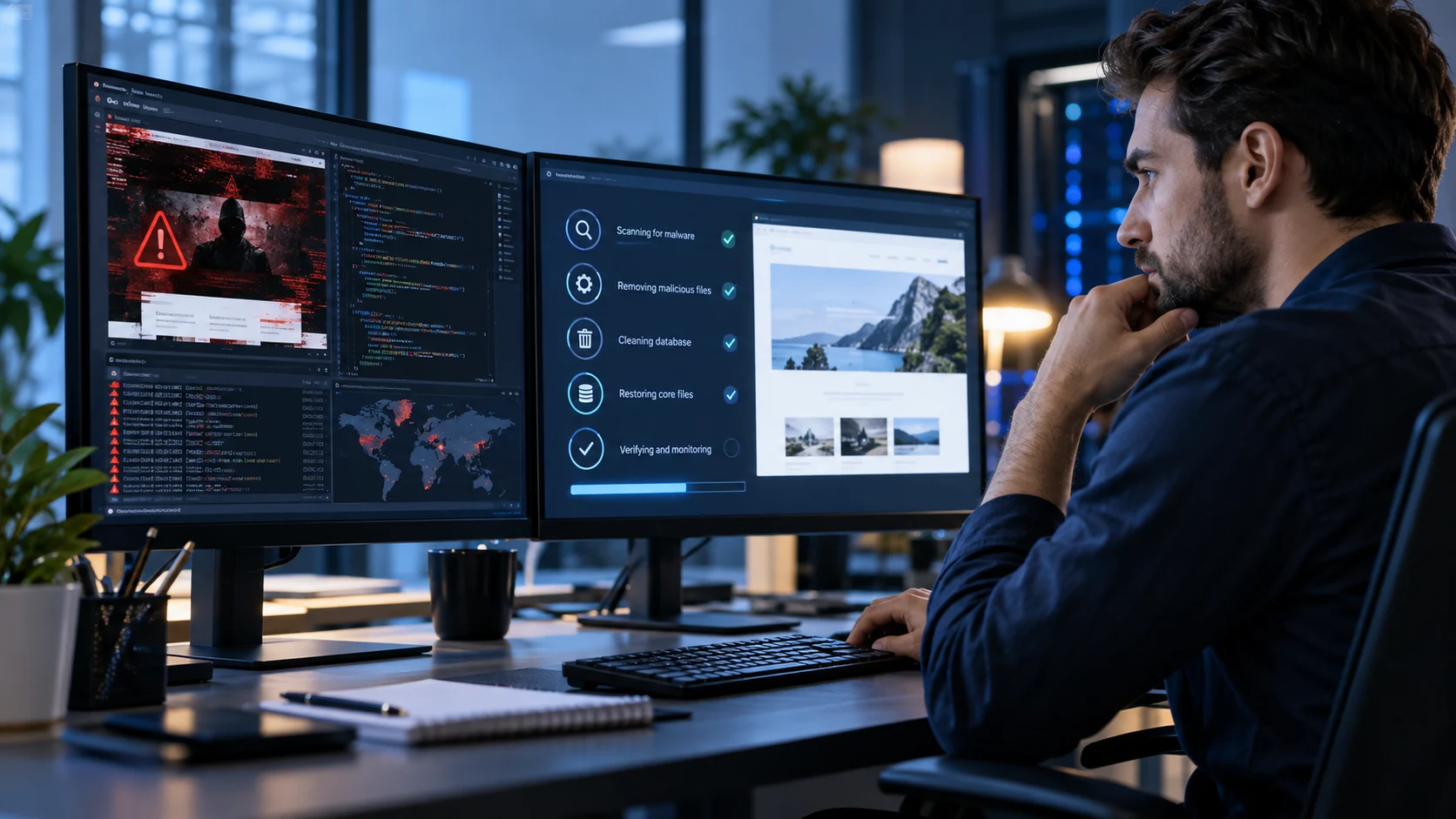
Understand suspicious behavior and agree on recovery priorities.

Plan safer updates, access rules and critical workflow checks.

Switch between common business scenarios to see where a conversation might start.
For teams that rely on their website for leads, contact forms, appointments or customer trust, an unclear security concern can interrupt normal work.

Share your platform, website URL, signs of a problem and the impact on your business. No passwords in the form.
Confirm ownership, systems in scope, agreed tasks, exclusions and how to obtain access safely.
Understand what a review could cover, which decisions matter and what needs your approval.
Technical work and deliverables follow the accepted proposal, with handover responsibilities made clear.
No automatic scans, invented guarantees or one-size-fits-all commitments.

For California City-based companies, digital agencies and online stores, the practical security questions are often about who owns which systems, how decisions get approved, and what happens when something breaks.
Defendoria offers remote-first consultations. No local office or on-site personnel are claimed for this location.

Defendoria was founded by Dr. Syed M. Waqas Shah, PhD in Cyber Security. Our approach prioritizes clear communication, scoped assessment and practical decisions for the people responsible for a website.
Whether your site runs a store, takes bookings or represents a growing company, we start with your actual technology and responsibilities rather than one-size-fits-all promises.
Clear communication, authorization and scope matter just as much as the technical work.
You can request a remote-first consultation for your website. Service availability, scheduling and commercial terms are confirmed before any engagement.
Defendoria does not claim a physical office in this location. Website-security consultations are remote-first, and any technical work requires an agreed scope.
No. The inquiry is only a way to discuss a possible engagement. Technical access, scans and testing require separate, explicit authorization and a defined scope.
A website URL, your platform, a short description of the concern and how to contact you. Do not send passwords, payment details, access tokens or customer records in public forms.
No. Security depends on scope, site condition, dependencies and future threats. The agreed proposal should describe what will be reviewed or delivered, without promising risk-free operation.