

Defendoria
Website security support for agencies

Security support. Built for your agency.

Add a clearer security workflow to your client services, with agreed technical responsibilities, communication ownership and practical handovers.

Build a repeatable route for client assessments, agreed technical delivery and incident coordination while keeping the client relationship and approvals clear.

Clear scope. Human explanations. Your approval first.
Agency team reviewing client website security projects in a meeting (AI-generated conceptual imagery)
Conceptual cybersecurity support specialist at a service desk (AI-generated conceptual image)
A more useful handoff.Your team. Clear responsibilities.
Client assessmentsTechnical delivery
You know the client. We define the technical work.
Security starts with the website you run.What a partner workflow can define

Built around the website
you actually run.

WWordPress wooWooCommerce Custom websites
Dr. Syed M. Waqas ShahExpertise behind the workFounded by Dr. Syed M. Waqas Shah
PhD in Cyber Security
Scope agreed firstKnow what will be reviewed.
Your approval mattersAccess and changes stay controlled.
Findings with evidenceUnderstand the reason for each action.

Security and payment marks you recognize.

Understand the security and payment signals your customers see, together with the controls behind your website.

Make security requests manageable

Client security requests
should not derail the whole team.

Agencies need a dependable way to scope security work without losing ownership of the client relationship.

Cybersecurity team examining website threats and security findings on an analysis dashboard
You know the clientAgree who leads communication

What a partner workflow can define

Choose the support your agency needs.

Explore possible collaboration routes. The commercial model, client permissions and technical scope are agreed for the relationship.

Client assessments

Give client security questions a defined starting point.

A scoped assessment can help your team understand a client website’s security priorities before planning implementation.

  • Client authorization
  • Assessment scope
  • Handover

We agree the evidence, reporting format and responsibilities required for a useful agency handover.

What this helps clarifyThe environments, access and methods included.

Technical delivery

Support the work behind the recommendation.

Assessment and implementation can be scoped separately or together. The workflow should explain who approves and carries out changes.

  • Implementation boundaries
  • Change safeguards
  • Completion record

We discuss coordination with your developers, hosting contacts and existing maintenance processes.

What this helps clarifyStaging, backups, approval and verification responsibilities.
Incident coordination

Plan how a client incident reaches the right people.

A suspected compromise needs clear authorization and an appropriate recovery scope.

  • Incident intake
  • Communication ownership
  • Recovery boundaries

We discuss technical contacts, client communication and escalation so an agency is not left translating an undefined process.

What this helps clarifyWho updates the client and who approves material decisions.
Partner workflow

Keep the relationship and responsibilities clear.

Agencies can need different levels of visibility and participation in the delivery process.

  • Delivery model
  • Reporting arrangements
  • Commercial expectations

Client-facing or agency-led reporting, branding arrangements and working expectations are discussed before the workflow is used.

What this helps clarifyAudience, format and any agreed branding or white-label terms.
The focusGive client security questions a defined starting point.
Illustrative website security assessment dashboard showing prioritized technical findings
Evidence and priorities

Work begins with an agreed scope and your authorization.

Illustrative cybersecurity support specialist discussing website security options (AI-generated conceptual image)

Fit your delivery process

A useful extension
of your delivery process.

Partnership works better when the technical scope and client relationship have clear owners.

Clear intake, decisions and reporting help security work fit the wider client project.

Keep ownership explicit Agree who communicates with the client and who authorizes technical work.
Fit the existing workflow Coordinate with project management, development and hosting processes.
Make the handover usable Document decisions, completed work and tasks that stay with the agency or client.
Explore the website assessment service

What you receive

Handovers your team
can actually use.

The goal is useful technical work and clear communication, with the format agreed for each engagement.

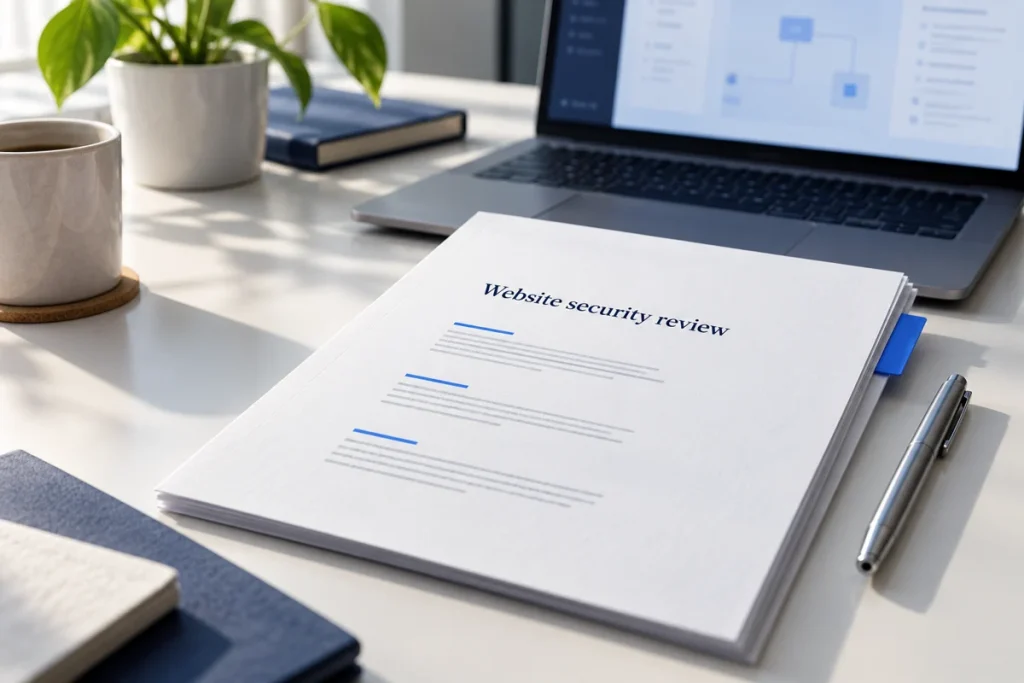
Original conceptual still-life of a website security review dossier beside a laptop
Useful findings and responsibilities for an agency handover.
Defendoria.Illustrative service handover

Agency Partnerships handover

A handover your
agency can work with.

This sample illustrates how a partnership can clarify a client engagement before technical work begins.

Illustrative example

A client review without a recorded approval owner

A technical request can stall when it is unclear who may authorize the work and who should communicate decisions to the client.

Confirm the client’s permission, the agency’s role and the contacts who can approve the proposed scope.
A defined client scopeUseful findings and prioritiesA delivery recordA responsibility handover

Build a partnership
around clear handoffs.

Start with an agreed working model, then scope each client engagement appropriately.

1

Align the working model

Discuss the agency’s services, client ownership and the support you want to add.

2

Scope the client work

Confirm permission, environments, contacts and technical deliverables.

3

Coordinate delivery

Agree approvals and safeguards, then communicate through the chosen workflow.

4

Hand over and review

Provide the agreed findings or work record and refine the process for future projects.

Architecture and engineering team reviewing a portfolio website beside a building model (AI-generated concept)
Conceptual cybersecurity support specialist at a service desk (AI-generated conceptual image)
Clear responsibilities.
Useful next steps.

A scope you can understand

Agree the partnership before promising the service.

Client permissions, delivery arrangements and commercial commitments need to be explicit.

Client authorization

The owner’s permission and the scope the agency can commission.

Work on additional systems or access outside that authorization.

Communication and branding

The reporting audience and any approved white-label or agency-led workflow.

Use of branding, representations or client commitments not agreed in the partnership.

Availability and delivery

The project schedule, responsibilities and response arrangements in the agreement.

Unspecified service levels, unlimited support or guaranteed emergency capacity.

Talk through the scope

The way your website works

For agencies with different delivery models.

A partnership can support your existing process rather than require every client project to work the same way.

Web design and development agencies

Bring security assessment and agreed hardening into launches, inherited-site projects and maintenance conversations.

Discuss a partnership
Dr. Syed M. Waqas Shah, founder of Defendoria

The people behind the work

Expertise matters.
So does being understood.

Defendoria was founded by Dr. Syed M. Waqas Shah, who holds a PhD in Cyber Security. That academic foundation informs a practical focus: helping website owners understand technical concerns and make clearer decisions.

Dr. Syed M. Waqas ShahFounder · PhD in Cyber Security

A good conversation leaves room for your questions. We explain the scope, discuss the evidence and connect recommendations to the way your business operates. You should understand what is being proposed before deciding how to proceed.

Research-informed thinkingPractical business context
Meet Defendoria

Prepare for the conversation

Bring a picture of your agency workflow.

You can start the partnership conversation without sending client credentials or confidential records.

Your service model
Tell us what you deliver and where website security support would fit.
The type of client websites
Mention common platforms, hosting arrangements and recurring concerns.
Your preferred handoff
Explain whether your team wants technical findings, implementation support or incident coordination.
A first project, if you have one
Describe the situation and authorization path without sharing sensitive client information.

Before we begin

A clearer way
to work together.

The partnership model should be agreed before it is offered to a client.

Ask about your website
Do you offer white-label security support?

We can discuss an agency-led or white-label arrangement. Reporting, branding, communication ownership and commercial terms must be agreed before the model is used for client delivery.

Will you speak directly to my client?

That depends on the agreed workflow. The agency can lead communication, or direct technical discussions can be arranged with appropriate client permission.

Can we start with one client project?

Yes. A single assessment, implementation or recovery engagement can be discussed before developing a broader working relationship.

Who is responsible for client authorization?

The legitimate website owner’s permission is required for the work. The agency’s authority, technical boundaries and approved contacts should be established during intake.

Can you support several client websites?

We can discuss a portfolio workflow. Each environment still needs clear authorization, scope, access arrangements and practical delivery expectations.

Are response times and partner pricing fixed?

These are commercial terms to agree for the relationship or project. The website does not imply a particular service level, unlimited capacity or an undisclosed reseller rate.

Start with a conversation

Let’s make security
part of your workflow.

Tell us about your agency, the websites you support and the handoff you need. We will discuss a practical partnership model.

Start with your website.
Get a human conversation.
Please keep client credentials and confidential records out of the enquiry.
Tell us where your agency needs security support.

No passwords or payment information needed. A consultation request does not authorize testing.